

Owning a Patek Philippe watch isn’t just about possessing a precise timepiece; it’s about holding a timeless symbol of elegance and sophistication. To complete that luxurious aesthetic, the watch strap plays a crucial role. This Zuli Watch article provides a comprehensive guide to replacing your Patek Philippe leather strap, covering why it’s necessary, 5 golden tips you can’t overlook, and a comparison of the 3 best options in 2025, helping you make the most informed decision.
Why You Need to Replace Your Patek Philippe Leather Strap
Regularly replacing your Patek Philippe leather strap is essential for several important reasons related to both aesthetics and functionality. Leather straps, no matter how high-quality, have a finite lifespan and will be affected by time, environment, and usage.
6 Signs Your Patek Philippe Leather Strap Needs Replacing
You should consider a new strap for your Patek Philippe watch when you notice one or more of the following signs:
- Visible Wear and Tear: The strap surface looks distinctly old, frayed, or shows signs of peeling, cracking, or breaking, especially around the buckle holes and contact points with the clasp.
- Discolored or Faded: The strap’s color has faded unevenly or become patchy due to exposure to sunlight, sweat, or chemicals.
- Unpleasant Odor: The leather strap starts to develop a foul smell, indicating the absorption of sweat and accumulated bacteria over time.
- Loss of Elasticity: The strap’s texture changes, it becomes stretched out, and no longer fits snugly on your wrist as it once did, causing a loose feeling.
- Compromised Clasp or Pins: The buckle or spring bars become loose, damaged, or bent, posing a risk of the watch falling off.
- Desire for a Style Change: Simply wanting to refresh the look of your beloved Patek Philippe watch.
Related Articles:
Benefits of Replacing Your Leather Strap
Replacing your strap not only addresses the issues above but also restores the original luxurious appearance of your Patek Philippe. A new, well-fitting leather strap will immediately elevate the watch’s aesthetics and value.
Moreover, a new strap improves wearing comfort, eliminating the discomfort from a deteriorated old strap. It also ensures better hygiene, reducing the risk of skin irritation from bacteria and mold. Most importantly, a sturdy new strap minimizes the risk of accidental drops for a high-value watch like a Patek Philippe.

5 Key Considerations When Replacing Your Patek Philippe Leather Strap
While seemingly simple, replacing a leather strap requires extreme caution to protect your Patek Philippe watch from potential damage. Here are 5 crucial tips to keep in mind:
1. Accurately Determine Strap Dimensions (Lug Width & Buckle Width)
Choosing the correct strap size is paramount for a perfect fit and overall aesthetics. You need to accurately determine two measurements: Lug Width (the width where the strap attaches to the watch case) and Buckle Width (the width where the clasp attaches).
Different Patek Philippe collections (like the Patek Philippe Nautilus, Patek Philippe Calatrava, Patek Philippe Aquanaut) may have varying strap sizes. Check your watch’s specifications or measure directly with a specialized caliper. Incorrect strap size will result in poor aesthetics, difficulty in installation, and even the risk of the strap coming loose.
2. Understand High-Quality Leather Materials
The leather material largely determines the strap’s durability, beauty, and feel. Some popular and premium options for Patek Philippe watch straps include:
- Alligator/Crocodile Leather: This type of leather is renowned for its supreme luxury, unique grain patterns, and high durability, though it comes with a higher price tag. It’s a common choice for high-end Patek Philippe models.
- Calfskin Leather: This leather is characterized by its softness, diverse color options, more accessible price point, and decent durability. French or Italian calfskin is often preferred.
- Ostrich, Lizard Leather, etc.: These offer a distinct, unique look for those seeking something different.

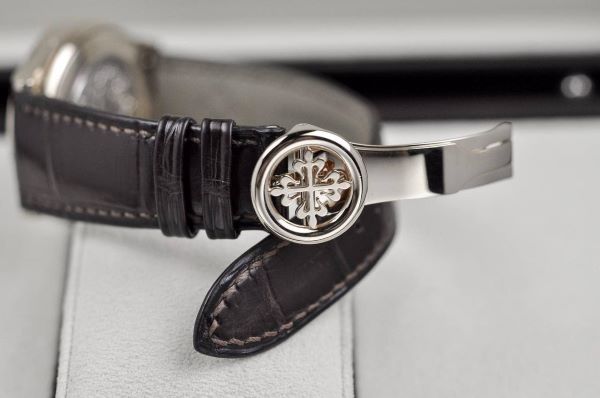
Also, pay attention to the lining material on the inside of the strap. Leathers like Zermatt leather help wick away sweat effectively and significantly increase comfort during extended wear.
3. Choose a Color & Style that Suits Your Taste
The strap color should harmonize with your Patek Philippe watch’s dial color and case material. A basic rule is that light dials (white, silver) often pair well with black, navy blue, or dark brown straps; dark dials (black, blue) can be combined with black, brown, or more distinctive colors. Rose gold cases often go with brown or black straps.
Beyond color, strap style is also crucial. You can opt for a plain leather strap for an elegant, classic look or a strap with prominent stitching (contrasting or matching) to add a more personalized, sporty touch.
4. Consider Keeping Your Original Patek Philippe Clasp
An original Patek Philippe clasp (pin buckle or deployant clasp) holds significant value, not just materially but as a brand icon. If your old clasp is still in good condition, keeping the original clasp to attach to a new strap saves considerable cost and maintains the watch’s authenticity.
However, removing and installing the clasp requires specialized skills and tools to avoid scratching it. Ensure the place where you have your strap replaced can perform this operation safely.
5. Absolutely Prioritize a Reputable and Professional Strap Replacement Service
This is the final yet equally crucial factor. The technician’s skill and specialized tools directly impact the safety of your Patek Philippe watch. An unreliable place carries a high risk of scratching the case, damaging the pins, or incorrect installation, severely affecting the watch’s aesthetics and value.
Look for watch stores, repair centers, or workshops with a good reputation, specializing in luxury watches, and receiving positive reviews.
3 Best Options for Patek Philippe Leather Strap Replacement
When deciding to replace your Patek Philippe leather strap, you have three main options, each with its own pros and cons to consider carefully.
1. Authentic Patek Philippe Strap
This is the “gold standard” option. The biggest advantages are the highest guaranteed quality, perfect compatibility with the watch, and full preservation of the watch’s collector and original value.
However, the downside is the very high cost, often much more expensive than other options. Order waiting times can be long, and customization (in terms of colors, materials outside the standard catalog) may be limited. You can only purchase genuine watch straps at authorized Patek Philippe service centers or official dealers.
2. Custom Handmade Leather Strap
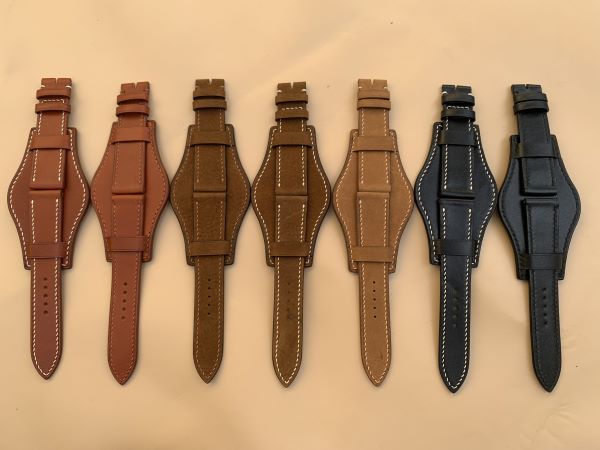
This option is favored by many who appreciate uniqueness and personalization. The outstanding advantage is quality that is very close to genuine items, especially if you choose a reputable handmade leather strap workshop. More importantly, customization possibilities are very high: you can freely choose the type of leather (even rare ones), color, precise dimensions, stitching style, thickness, etc., to create a strap that reflects your personal touch. The cost is also more reasonable than an authentic strap.
The drawback is that you need to do thorough research to choose the right reputable workshop, as the quality of handmade straps can vary. Talented strap artisans use meticulous craftsmanship to create unique products worthy of your Patek Philippe watch.
3. Reputable Aftermarket Strap
Many renowned watch accessory brands worldwide also produce high-quality leather straps that can be used as replacements for Patek Philippe (e.g., Hirsch, ZRC, Camille Fournet…). The advantages of this option are the wide variety of readily available designs, good, reliable quality, and the most competitive price among the three options.
However, customization capabilities are usually not as high as handmade straps, and the sophistication may not match genuine straps or the highest-end handmade ones. You need to choose high-end product lines from these brands to ensure compatibility with your Patek Philippe watch.
Safe Step-by-Step Process for Patek Philippe Leather Strap Replacement
Having the strap replaced by a professional following the correct procedure ensures maximum safety for your Patek Philippe. Here are the basic steps a professional technician typically performs:
- The technician prepares all specialized strap replacement tools, most importantly the appropriate spring bar tool and a clean, soft cloth.
- The technician carefully and gently uses the tool to remove the spring bars and the old strap from the watch lugs, avoiding scratching the precious metal case.
- The technician performs a preliminary cleaning of the lug area with a soft cloth or specialized brush to remove accumulated dust and debris.
- If the customer requests to keep the original clasp, the technician will precisely remove the clasp from the old strap.
- The technician correctly installs the clasp (old or new) onto the new strap, ensuring the proper orientation.
- The technician carefully installs the new strap and spring bars onto the watch, ensuring the spring bars are correctly seated in the lug holes.
- Finally, the technician checks the security of the spring bars, clasp, and the fit of the strap on the customer’s wrist (if possible).
How to Keep Your Patek Philippe Leather Strap Looking New
Proper care significantly extends the lifespan and maintains the beauty of your Patek Philippe leather strap. Apply these simple tips:
- Avoid Water and Moisture: These are the number one enemies of leather straps. Minimize contact with water or excessive sweat. Always take off your watch when showering, swimming, or engaging in strenuous activities that cause profuse sweating.
- Avoid Chemicals: Do not let the leather strap come into direct contact with cosmetics, perfumes, sunscreens, solvents, or strong cleaning agents.
- Avoid High Temperatures & Direct Sunlight: High temperatures and UV rays can dry out, harden, crack, and fade the leather. Do not expose your watch to harsh sunlight or place it near heat sources.
- Gentle Cleaning: If the strap gets dirty, only use a soft, clean, slightly damp cloth (not soaking wet) to gently wipe the surface. Absolutely do not use soap or strong detergents.
- Moisturize (Cautiously): You can use a colorless, good-quality specialized leather conditioner, but only in very small amounts and not too frequently (once every few months) to avoid clogging the leather’s pores.
- Air Dry Naturally: If the strap accidentally gets wet, immediately blot it dry with a soft cloth and let it air dry completely at room temperature in a well-ventilated area. Do not use a hairdryer or expose it to the sun.
- Let the Strap “Breathe”: Avoid wearing the watch too tightly, which puts pressure on the strap. It’s a good idea to take the watch off your wrist when sleeping to allow the strap to “rest” and dry out.
Frequently Asked Questions (FAQ)
1. How long does it take to replace a Patek Philippe leather strap?
Typically, if the strap is readily available and you bring your watch to a professional store, the removal and installation process only takes about 15-30 minutes. However, if you order an authentic strap or a custom handmade leather strap, the waiting time can range from a few days to several weeks.
2. Is it safe to replace a Patek Philippe leather strap yourself at home?
Replacing the strap yourself carries high risks, especially with a valuable watch like a Patek Philippe, if you lack experience and specialized tools. You could easily scratch the case, bend the lugs, or damage the spring bars, seriously impacting the watch’s aesthetics and value. Zuli Watch advises you to seek professionals.
3. Are handmade leather straps as durable and beautiful as authentic straps?
High-quality handmade straps crafted by reputable workshops are of very good quality, using premium leather materials and meticulous craftsmanship, resulting in high durability, beauty, and uniqueness. However, remember that they are not “authentic” products manufactured and inspected by Patek Philippe.
4. How can I tell if a crocodile leather strap is real?
Distinguishing real crocodile leather requires experience, but you can rely on some points: natural skin grain patterns that don’t repeat perfectly like embossed patterns; real leather is usually softer; you might see small, angled pores on the surface; and it has a characteristic leather smell. The best way is to purchase from reputable sources to ensure authenticity.
5. Does Zuli Watch provide Patek Philippe leather strap replacement services?
Zuli Watch specializes in high-quality replica watches in general and Patek Philippe Replica watches in particular, along with watch accessories. We currently do not directly perform strap replacement services for authentic Patek Philippe watches. However, we offer high-quality replacement leather strap options, including exquisite handmade leather strap models, suitable for the prestige of Patek Philippe. Contact us for the best support!
Conclusion
Replacing your Patek Philippe leather strap at the right time and in the right way is a crucial decision to maintain the value, ensure the safety, and refresh the beauty of your exquisite timepiece. Understanding the signs that indicate a need for replacement, the 5 important tips, and the pros and cons of the three options (authentic strap, high-end handmade strap, reputable aftermarket strap) will help you make the most informed decision.
Don’t hesitate to invest in a quality strap that is worthy of your prestigious Patek Philippe watch. If you need more advice or are looking for high-quality replacement leather strap solutions for your Patek Philippe, contact Zuli Watch immediately. We are always ready to assist you! Share this article if you find it helpful for fellow Patek Philippe enthusiasts!


